

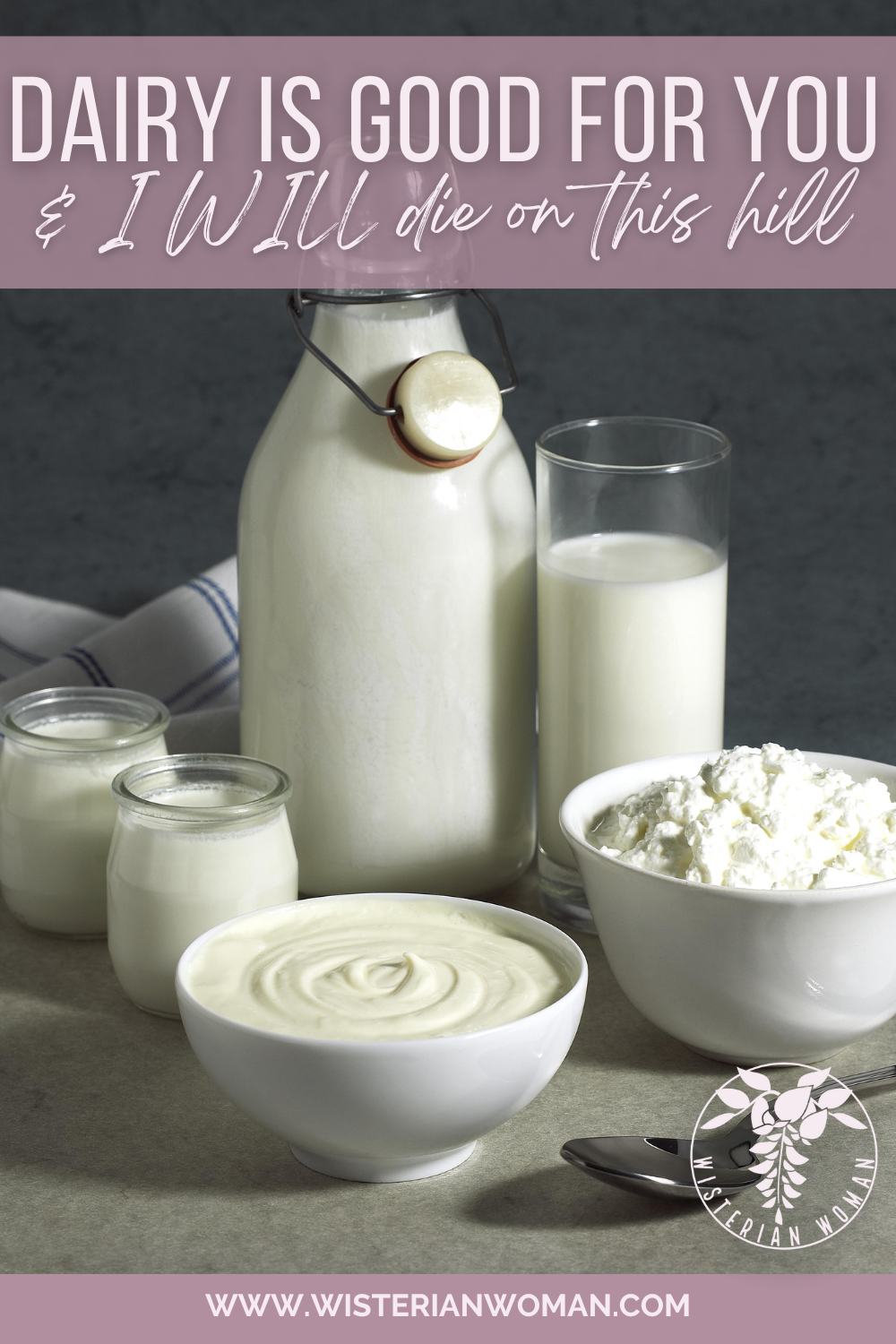
Is dairy good for you? Short answer: yes. Long answer: absolutely, and I will passionately defend it with a block of cheddar in one hand and a spoonful of cottage cheese in the other. Forget the fear-mongering — dairy isn’t your enemy. It’s your creamy, calcium-rich friend who’s been unfairly canceled.
(Apologies to the vegans. Actually, no. I take that back.)
Let’s get one thing straight right out of the gate: I love dairy. I love it like a Midwesterner loves ranch. Like a French chef loves butter. Like your lactose-intolerant friend wishes they could.
I’ve heard all the anti-dairy arguments: it’s inflammatory, it’s meant for baby cows, it causes acne, it’s “oppressive” (??), and I’m here to tell you… respectfully, lovingly, and with a tall glass of whole milk in hand: no, it’s not. Or at least, not the way you think. And if loving cheese is wrong, I don’t want to be right.
The Nutritional Truth: Dairy Is a Powerhouse
Let’s talk about the facts. Dairy is one of the most nutrient-dense food groups on the planet. A single cup of milk (real milk, not the almondy water that’s basically beige sadness) provides:
- 8 grams of protein
- Calcium for bones that won’t snap when you sneeze
- Vitamin D, B12, and potassium
- Conjugated Linoleic Acid (CLA), which has been linked to fat loss and improved metabolic health

Not everyone has time to forage wild selenium seeds or source their ingredients from the Himalayas to build a “perfectly balanced” macrobiotic bowl. Even if you did — you should still add milk to it.
Because here’s the deal: milk is accessible and bioavailable. That means your body actually knows what to do with it. The nutrients in dairy aren’t just technically “present” on a label — they’re in a form your body can absorb and use without needing a biochemistry degree or a $70 supplement stack. You drink it, your body goes, “Ah, yes. Fuel. Let’s build bones, make hormones, and function like a proper adult.”
And speaking of protein, let’s talk whey protein powder — one of the best sources of protein you can get. Derived from dairy, it’s incredibly bioavailable, meaning your body can absorb and utilize it with ease. Whey protein is superior to most vegan alternatives, and it’s a powerhouse for muscle repair and growth. Plus, it’s an easy way to level up your protein game without the need for questionable “plant-based” supplements. For example, Optimum Nutrition Gold Standard 100% Whey is a go-to for its quality and smooth taste. Not to mention, it’s a simple, quick way to add protein to your diet without trying to turn quinoa into a meat substitute.
Also, have you ever looked at cottage cheese macros? It’s like the food equivalent of a CrossFit coach — annoyingly efficient.
The Underrated MVP: Cottage Cheese
Let me take a moment to scream this into the void: COTTAGE CHEESE IS A PROTEIN POWERHOUSE AND I WAS LIED TO. For most of my life, I thought cottage cheese was a sad diet food — like, the kind of thing Susan from your mom’s book club ate with half a grapefruit while silently weeping in the 90s. I assumed it tasted like lumpy disappointment.
But then I actually tried it.
And folks — it SLAPS.
Here’s what you get in just ½ cup of 2% cottage cheese:
- 90 calories
- 12 grams of protein
- 2.5 grams of fat
- 3 grams of carbs
- Zero added sugar
- All the creamy, tangy, low-key addictive vibes you never knew you needed
It’s like if mozzarella had a funky, chilled cousin who could hang with fruit, eggs, toast, hot sauce, pesto, or just straight from the spoon. It’s endlessly versatile. It goes both ways – sweet and savory. Throw it in pancakes. Make a strawberry cheesecake parfait. Blend it into pasta sauce. Spread it on toast. Eat it with a spoon and feel superior. You will feel your muscles growing. Cottage cheese is the introvert of the dairy aisle — quiet, misunderstood, and secretly a legend.

And Don’t Even Get Me Started on Mozzarella
Mozzarella deserves its own Ted Talk. It’s melty. It’s chewy. It’s the reason pizza is sacred. Fresh mozzarella with basil and tomato? A lifestyle. Shredded mozzarella on eggs, flatbreads, or literally anything? Peak comfort. It’s dairy royalty. You can stretch it, tear it, melt it, or pair it with strawberries and balsamic glaze like the classy little protein girlie you are.
Now Compare That to Almond Milk
Almond milk is the least offensive of the dairy-free “milks” — and I mean that in the most backhanded way possible. It doesn’t taste like anything. It barely functions. It’s what you drink when your personality trait is “I’m scared of real milk but also hate joy.”
You taste like someone whispered the word nut into a cup of water.
But here’s the kicker: most almond milks have to be fortified with synthetic vitamins and sugars just to qualify as “milk.” That “healthy” label? Smoke and mirrors. We’re talking calcium carbonate from literal rock, vitamin D2 (the discount bin version of D3), and gums or emulsifiers to make it feel like it has body — because it doesn’t. Unless you count sadness as a texture.
Let’s look at the actual nutritional breakdown of your average unsweetened almond milk (per 1 cup):
- Calories: 30–40
- Protein: 1 gram
- Fat: 2.5–3 grams
- Carbohydrates: 1–2 grams
- Calcium: 450mg (fortified — not naturally occurring)
- Vitamin D: Usually around 2.5mcg (also fortified)
- Almonds: 2% — that’s two almonds per cup. Two.

Oh, and almonds make up a whopping 2% of it. You’re not drinking almond milk. You’re drinking nut-flavored water thickened with science.
And we haven’t even gotten to how useless it is in coffee — it curdles, separates, and turns your oat milk-hopeful cappuccino into beige dishwater with a bitter aftertaste. Don’t believe me? Here, believe someone else. If that didn’t convince you, allow me to appeal to authority with a scientific paper. Still don’t believe me? Fine, suffer then.
And While We’re Here: Cashew “Cheese” Is a Crime
Now let’s talk about cashew cheese, the Pinterest-fueled lie we’ve all tolerated for far too long.
It’s not cheese. It’s bean dip with a superiority complex. It has the texture of hummus that gave up halfway, and the taste of someone trying really hard to convince themselves they’re over dairy. You’re not. Your mac and “cheese” told me so.
Cashew cheese doesn’t melt. It wilts. It doesn’t brown — it glistens menacingly. It’s the cheese equivalent of a handshake that lasts too long and leaves your palm damp and confused.
You can blend it with all the nutritional yeast and lemon juice you want — it’s still not going to make a grilled cheese sandwich that changes lives. It’s just going to make you sad and your bread damp.
Meanwhile, whole milk is over here casually handing you 8 grams of protein, healthy fats, and a childhood memory.
But What About the Vegans?
Now, before someone in the comments section comes for me wielding a block of tofu and a documentary from 2017, let me say this: I admire your dedication. I do. You’ve committed to a lifestyle, and that takes guts. And fiber. So much fiber.
But here’s the thing — just because you broke up with dairy doesn’t mean we all have to delete its number. For the rest of us who aren’t allergic, intolerant, or philosophically opposed to cheese boards, dairy can be an incredible source of nourishment.
Also, I don’t trust a diet that bans whipped cream. I said what I said.

Let’s Talk Lactose
Yes, some people don’t digest lactose well. I am not here to gaslight the gastrointestinally challenged. But that doesn’t mean dairy is evil — it means your enzyme game is weak. And that’s okay! That’s what lactose-free milk, yogurt cultures, and those magical little Lactaid pills are for. Science wants you to have your cheesecake and eat it too.
What About the Hormones?
Oh, you mean the naturally occurring ones? Like the ones in kale and soy that no one seems to panic about? Modern dairy is regulated, safe, and not the Wild West of hormone injections and sad cows people love to imagine. In fact, many small dairies treat their cows better than most people treat their baristas.
A Word on Butter
Butter is the Beyoncé of fats. She’s rich, beloved, misunderstood by the early 2000s, and absolutely essential at Thanksgiving. Want to bake something that doesn’t taste like damp cardboard? Use butter. Want your vegetables to taste like they matter? Butter. Want to make a steak cry tears of joy? Butter.
Don’t fear the butter. Fear the “buttery spread” with 47 ingredients and no soul. Fat is good for you. You need it, in moderation of course.

Okay, but which milk is the milk?
Let’s end this with a little dairy diplomacy. Look, I’m not here to start a civil war over milk fat percentages… but whole milk is clearly the chosen one. It’s creamy. It’s satisfying. It tastes like milk, not like the memory of milk filtered through a Brita.
Whether you’re making a latte, a cappuccino, or just enjoying a glass on its own, the texture of whole milk is unparalleled. And if you’re in the mood for frothy indulgence, a milk frother is a must-have. It transforms whole milk into the creamiest, most luxurious foam, making your homemade lattes just as good as the ones from your favorite coffee shop.
Whole milk is the luxurious robe of the dairy world. It’s what you want when you’re making a béchamel, frothing up a latte, or just standing in your kitchen with a cookie at 9 p.m. and no regrets.
Skim milk? It’s fine. It’s like milk that took a vow of poverty. A watered-down ghost of its former self. 1% and 2% are the compromise milks — like the middle children of the dairy family — not bad, not great, just… trying their best.
But hey — as long as it came from a cow, it counts. You’re on the right side of history. Whether you’re pouring whole, 2%, or even the misunderstood 1%, you’re still getting real nutrients, complete proteins, and calcium your bones will actually recognize.
In Conclusion: Don’t Cancel Dairy
Whole milk gives you satiating fat, creaminess that feels like a hug, and flavor that hasn’t been filtered through seven layers of corporate diet culture. It’s the original — no oat emulsifiers, no nut-flavored illusions, just straight-up goodness from a cow that probably lives a better life than you do.
And yes, before you say it — many of the pro-dairy studies are funded by “Big Dairy.” That’s fair. But let’s take several giant steps back and consider this:
How much money, time, and quinoa has been poured into vegan propaganda over the last two decades?
Billboards, documentaries, celebrity influencers drinking green goo and looking vaguely constipated — all telling you that dairy is the enemy. We’ve been guilt-tripped by almond baristas and oat milk TikTokers into believing that real cheese is unethical and cow’s milk is a hate crime. Meanwhile, the rest of us are just trying to enjoy a bowl of cereal without being shamed by someone named Skylar who’s never eaten a Pop-Tart.
Say what you want, but the Got Milk? campaign got it right. Iconic. Sassy. And most importantly: based in actual biology. Your body knows what to do with milk. It doesn’t need a vitamin-enriched science experiment poured over granola. It needs real, bioavailable nutrients that don’t have to be artificially reassembled in a lab.
So yes — drink your whole milk. Swirl it into your coffee. Steam it into foam. Pour it over a cookie and tell guilt and diet culture to shut up.
Dairy has been around for 10,000 years. It’s not a trend. It’s not a fad. It’s a creamy, delicious constant. From the yogurt that kickstarts your gut microbiome to the mozzarella that completes your pizza — dairy is good for you. And I will, in fact, die on this hill. Preferably wrapped in a warm grilled cheese blanket.
To my vegan friends: I still love you. But you’re wrong. And that’s okay. We can still share a charcuterie board — I’ll just eat all the good parts.

more like this





Leave a Reply