

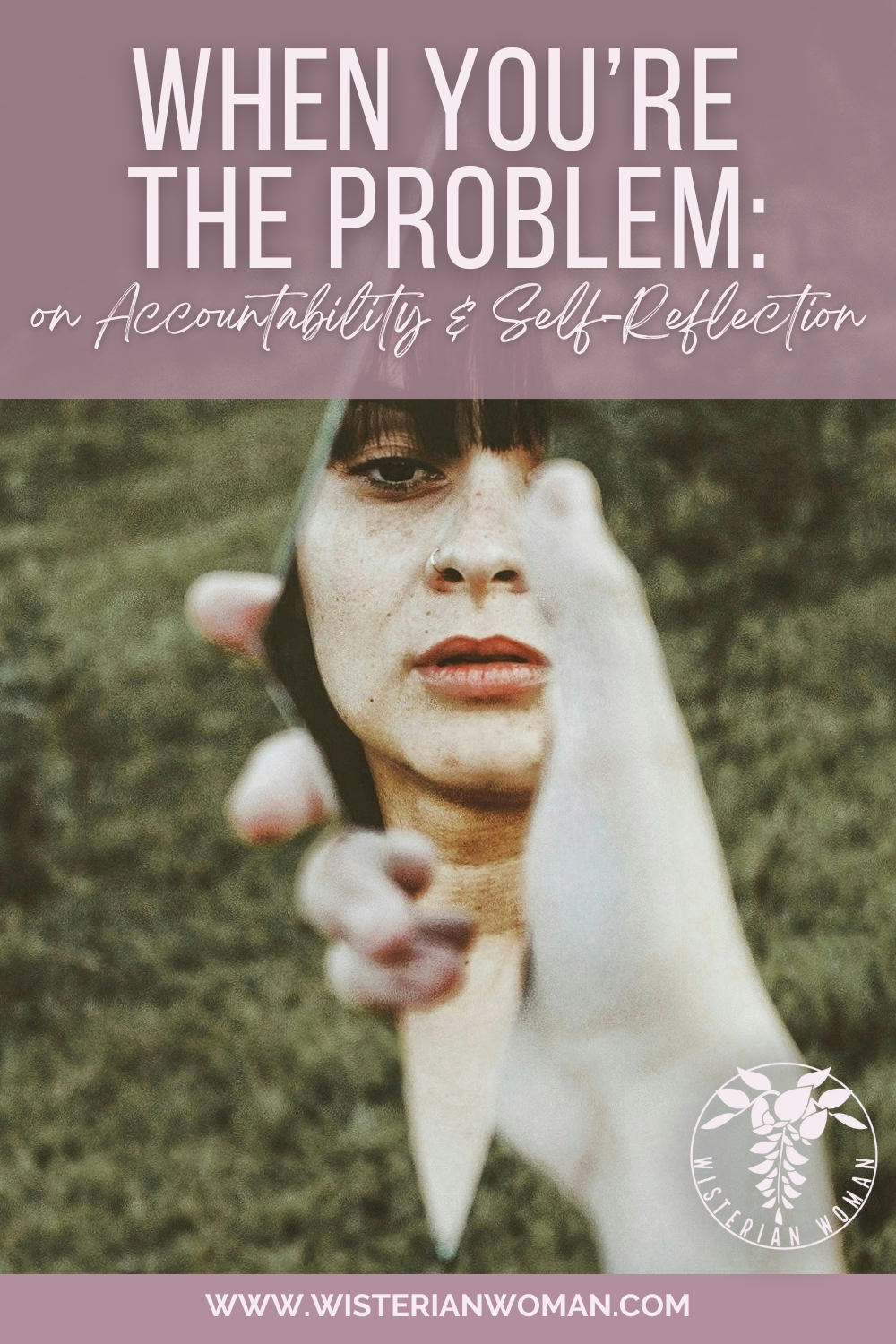
Explore how accountability and self-reflection can lead to personal growth, stronger connections, and greater self-confidence. Uncover practical steps and methods to face your fears and transform your life.
I’ll admit it proudly: I’m a Swiftie. Unless you’re living under a rock, you’ve probably heard the anthem of accountability and self-reflection: Anti-Hero. Of course, this song isn’t exactly positive. It reflects the deepest, darkest fears many of us face in life. What if everyone else is normal and healthy, and the real problem in my life is… me?
It’s a deafening prospect to consider. After all, we are hard-wired to blame the outside world and come up with excuses for why we are facing the problems we have in life. Your car broke down? Obviously it was a piece of garbage, and it had nothing to do with the fact that you didn’t maintain it. You’re broke? Obviously your job needs to pay you more, and it has nothing to do with the shopping spree you just went on last week. You catch my drift.
It’s easy to come up with a million reasons why the problem can’t possibly be us to avoid taking a good, long look at ourselves in the mirror. If you’ve been projecting, deflecting, and blaming others for the worst parts of your life and your circumstances, it might be time to try another approach. And this is probably gonna be hard, so you might want to sit down for this: accountability and self-reflection.
What Does Accountability Really Mean?
Accountability isn’t about dragging yourself through the mud or declaring yourself the sole villain in the story of your life. Beware of self-pity dressed up as a moral compass. Instead, accountability is acknowledging your role in what happens to you—not so you can beat yourself up, but so you can take charge of what comes next.
It’s actually empowering, knowing that you have a role to play in your problems, and therefore you have the ability to make things better.
Think of it like this: if your life is a car, accountability is realizing you’re the one holding the steering wheel. Sure, the road might have potholes (some bigger than others), but blaming the car for where you end up doesn’t change the fact that your hands were on the wheel the entire time.
When you embrace accountability, you’re no longer at the mercy of everything outside of you. Suddenly, you’re empowered to make different choices, take action, and create a better outcome for yourself. You’re not saying, “Everything’s my fault.” Instead, you’re saying, “This part was my responsibility, and here’s what I have the ability to do about it.”
Here’s an example: Maybe your boss keeps overlooking you for promotions. It’s easy to think, They just don’t like me. But accountability might mean asking yourself tough questions like, Have I communicated my goals clearly? Have I taken steps to develop the skills they’re looking for? Owning your part doesn’t mean the situation is fair; it just means you’ve recognized where your power lies.

Why Is Accountability So Hard?
Here’s the thing: accountability is tough because it forces us to face an uncomfortable truth—we aren’t perfect. And let’s be real, who wants to sit with that?
Psychologically, we’re wired to protect our self-image. Our brains love a good story where we’re the hero, and if something goes wrong, it’s much easier to point fingers at the villain. Blame is a natural defense mechanism. It feels safer to say, It’s not me; it’s them than to admit we might be the problem.
Ego plays a big role here, too. No one likes to think they’ve made mistakes, especially when those mistakes come with real-world consequences. Admitting fault can feel like admitting failure, and failure has a way of making us feel small and vulnerable. Add a dash of fear—fear of judgment, fear of change, fear of discovering flaws we’d rather not see—and suddenly, accountability becomes a mountain we’re too scared to climb.
And let’s not sugarcoat it: facing yourself can feel really overwhelming. You might start thinking, If I’m the common denominator in all these problems, what does that say about me? It’s a terrifying thought, but here’s the truth—it doesn’t say you’re unworthy or beyond help. It says you’re human, just like everyone else. And even better, you’re no longer a lave to your own whims. That’s huge.
The Mirror We Avoid: A Guide to Self-Reflection and Accountability
Self-reflection is one of the most powerful tools for personal growth, yet it’s something many of us avoid like the plague. Why? Because it forces us to confront uncomfortable truths—the flaws, mistakes, and choices we wish we’d handled differently. It’s easier to keep the mirror covered than to risk seeing our imperfections staring back at us.
But here’s the thing: self-reflection isn’t about tearing yourself down or getting stuck in a shame spiral. Instead, it’s about creating a space where you can ask honest questions, learn from your experiences, and figure out how to move forward.
Questions to Guide Your Reflection
If you’re ready to take a closer look at yourself, start with these questions surrounding areas of your life around which you feel regretful, shameful, or lacking:
- What role did I play in this situation? (Be specific—did I act out of fear, anger, or insecurity?)
- What could I have done differently? (Focus on actions, like listening more or reacting less.)
- What can I learn from this? (Shift your mindset to growth—how can this experience make me better?)
These questions become even more important in serious areas, like relationships. For example:
- Have I been controlling or manipulative with my partner?
- Do I tend to avoid hard conversations or use guilt to get my way?
- Am I creating an environment that feels safe, supportive, and kind—or am I acting out of my own unresolved pain?
The answers might sting, but recognizing toxic behavior—whether in relationships, friendships, or even at work—is the first step toward change. Remember, it’s no use labeling yourself as “toxic.” Rather, you’re acknowledging when your actions have caused harm and committing to doing better.

Tools to Support Self-Reflection
Self-reflection doesn’t have to happen in isolation. Here are a few methods that can help:
- Journaling: Writing your thoughts down can make them feel less overwhelming. Start by exploring specific moments where you felt proud or regretful.
- Meditation: Spend a few minutes each day observing your thoughts and emotions without judgment.
- Therapy or trusted conversations: A professional or a trusted friend can offer valuable insights and support.
If you’re ready to dive deeper into this journey, my Mind Body Whole Wellness Workbook offers over 100 self-reflective prompts and guides. From exploring boundaries to nurturing self-love and care, the workbook provides actionable tools to help you develop a deeper understanding of yourself and your relationships.

Steps to Embrace Accountability
Once you’ve reflected, it’s time to take action. Turning insights into real change requires bravery and intentional effort. Here’s how to start:
- Acknowledge Harmful Behavior
If you’ve acted in ways that hurt others—whether through criticism, manipulation, or neglect—own it. Apologize sincerely, without deflecting or making excuses. For instance, instead of saying, “I’m sorry if you felt hurt,” say, “I’m sorry I hurt you by doing [specific action].” - Start Small but Meaningful
Focus on small, actionable changes. For example:- Instead of interrupting during a conversation, practice active listening.
- If you’ve avoided responsibilities, take ownership of one task and follow through.
- Build Self-Awareness Habits
Make reflection part of your routine. You could:- Write down one moment each day where you handled something well and one where you could improve.
- Set aside time weekly to assess how your actions align with your values.
- Seek Accountability from Others
Growth doesn’t happen in isolation. Ask trusted people for feedback, especially in areas where you struggle. Be open to hearing hard truths and use them as tools for growth, not weapons to attack yourself. - Commit to Doing Better
Growth takes time and consistency. If you’ve acted toxic in relationships, commit to learning healthy communication, setting boundaries, or managing emotions constructively. Seek resources like books, therapy, or support groups to guide you. - Be Patient with Yourself
Facing serious flaws can be overwhelming, but it’s important to show yourself compassion. Accountability isn’t about perfection—it’s about making consistent progress, even if it’s slow.
The Rewards of Accountability and Self-Reflection
Taking responsibility for your actions and reflecting on your choices can feel challenging, but the benefits are undeniable. These practices lead to stronger relationships, personal growth, and a deeper sense of self-confidence.
One of the most powerful outcomes is the impact on your connections with others. When you acknowledge your missteps and work to improve, you build trust and create healthier, more open relationships. Whether it’s apologizing for an argument or addressing unhealthy patterns, accountability strengthens the bonds you share with those around you.
Self-reflection also fuels personal growth. By taking the time to understand your choices and learn from them, you can uncover hidden strengths and develop a clearer sense of direction. This process helps you feel more capable of handling challenges and making decisions that align with your values.
Taylor Swift’s Anti-Hero is a perfect illustration of the journey of facing yourself head-on. The song captures the weight of self-doubt but also highlights the transformative power of honesty. Recognizing the role you play in your own life doesn’t have to be a negative experience—it can be the start of something powerful and rewarding.
If you’re ready to dig deeper, my Mind Body Whole Wellness Workbook provides over 100 self-reflective prompts and guides to help you explore topics like boundaries, relationships, self-love, and self-care. These tools are designed to help you move forward with clarity and intention.
The process of accountability and self-reflection isn’t always easy, but the growth and confidence you gain are worth every step. By taking an honest look at yourself and owning your story, you create space for a more authentic, fulfilling life. And who knows? Maybe the “anti-hero” within you is just waiting to become your greatest strength.

more like this






Leave a Reply